
Beyond Theology
On Finding God Lovely, Not Just Interesting

As a Christian given to theological study, it can be difficult for me to remember that Heaven—for myself and those around me—is the goal. I have felt this sense coming on me recently, this over-intellectualizing of faith, this over-preoccupation with theology, which distracts from the basic and most important aspects of being a Christian at all: communion with Christ and His people as His servant.

I want to preface something off the bat: I am not condemning intellectualism in the Christian life—far from it, in fact, because I do not think it is prioritized enough for most believers. It was necessary when I was first growing in my faith for me to understand the theology of what I was professing to believe, for me to be catechized properly and have the apologetic knowledge to support my faith and be able to share and defend it.
Theology is good; good theology is important; studying apologetics is supremely helpful.
I am naturally bent towards study—I have a rather left-brained analytical approach to nearly everything, a natural curiosity and need to know—and thus it was good and necessary for me to delve into the intellectual side of faith. I do not want this to get lost in what I am discussing here.
However, I have come to a point where I think my intellectualism of faith has begun to distract from the faith itself.1 My intense study of the Bible, striving to understand every word in historical/literary/theological context, has begun to distract from the experience of merely sitting in the presence of God. My historical studies into liturgy has been making me an analyzer of Sunday mornings in church rather than a receptive participant of the congregation. My prayers have been feeling stale as I think about God in terms of how I have intellectualized Him and let familiarity to the doctrines of faith blind me to the immediacy of His presence. My worship has been half-hearted as I am mentally breaking down the metaphors and references of songs rather than simply worshipping. My interactions with other believers and even non-believers have become similarly analytical—I am thinking about theological arguments and trying to share information rather than sitting with people and sharing with them the love and care of Christ.
After falling in love with Jesus for the first time several years ago, I quickly fell in love with Christian apologetics and theology; I am of that breed who craves after knowledge, who seeks to understand things inside and out, and part of the excitement of Christianity was (and still is) this infinite well of knowledge which I can keep falling into for the rest of my days.
This is good. I stress that this is not a problem; if you are the same way, I do not want to come across as criticizing this approach to faith. Theology is beautifully rich and has changed my life. The problem is solely that I began losing sight of the point.
The obvious fact is that theology and intellectualism and Christian thinking cannot be an end in itself. The end is Jesus. The end is Heaven, God’s Kingdom come. Judgement Day will not include a theology exam. It is obvious, but I forget it all too often. I am forgetting it now, even as I write this.
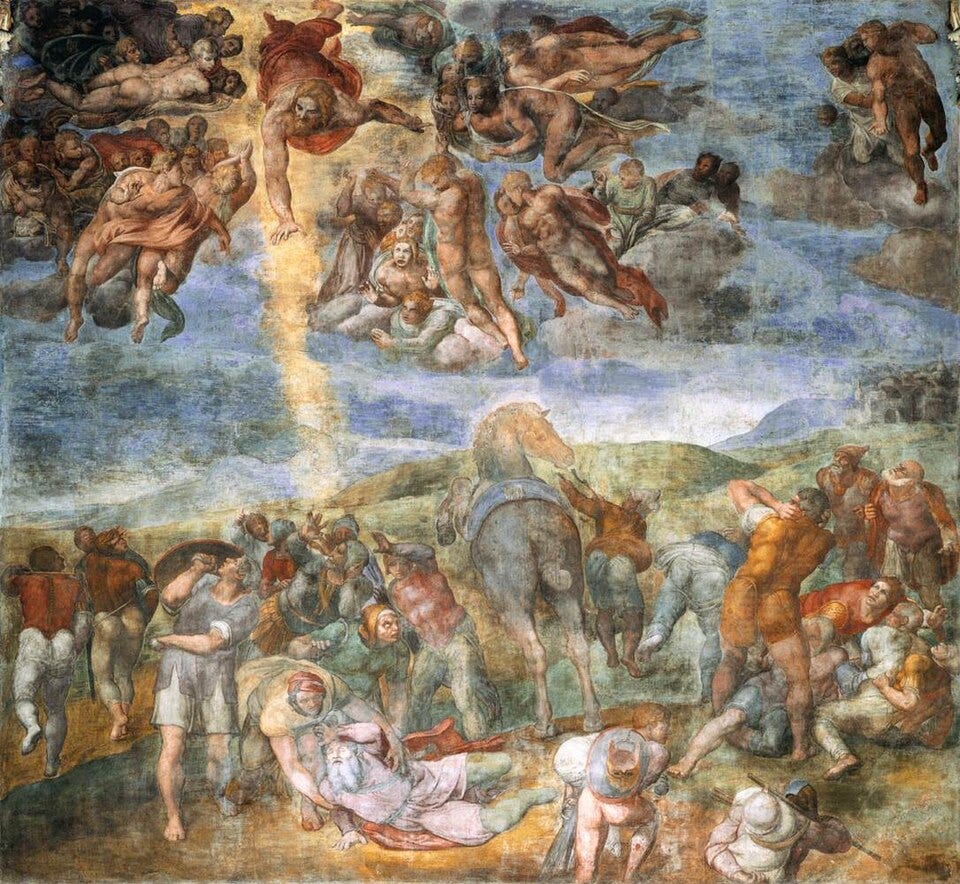
2 Peter 1:5-9 tells us what the goal is and where knowledge fits into it:
“But also for this very reason, giving all diligence, add to your faith virtue, to virtue knowledge, to knowledge self-control, to self-control perseverance, to perseverance godliness, to godliness brotherly kindness, and to brotherly kindness love. For if these things are yours and abound, you will be neither barren nor unfruitful in the knowledge of our Lord Jesus Christ. For he who lacks these things is shortsighted, even to blindness, and has forgotten that he was cleansed from his old sins.”
Notice the progression here: Faith must lead to virtue, and virtue gives us knowledge—knowledge, in other words, is a kind of “fruit” of moral conduct and understanding, not the other way around.
Knowledge then has a purpose: to instill self-control. The end goal of knowledge is discipline. From that discipline comes the strength to persevere in and toward godliness. Godliness leads to brotherly kindness toward all people, and ultimately this behavior of kindness instills in us active love.
And in the end we see that this mix of virtue/moral understanding as well as behavioral love toward others collects into the fruitful knowledge of Jesus Christ. This is knowledge which bears fruit—which leads us to love others better. Like Paul says, the greatest of the virtues is not knowledge or theological understanding, not even faith or hope, but love for others (1 Corinthians 13:13). If I have all the faith and understanding in the world, says Paul, but lack in love, I have nothing.
This is a concept of Christian faith that is so unbelievably basic and fundamental that we can be quick to overlook it—especially me, who overlooks it all too often. Theology is good, but love is infinitely more important. Good theology is important, but love must be the goal. Jesus’ example in the gospels is exactly this order: show love and service to your neighbor, and then share with him the Truth. Hungry people do not need to be preached at before to be fed.
Heaven is the goal, and Christ leads me to Heaven. Theology has helped me in monumental ways to understand Christ better, but it has not drawn me personally close to Him, has not made me more like Him, the way the practice of charity does. Knowledge is good and helpful, but right now I am finding that it is taking away from my ability to simply sit with the Lord and love Him. I want to find Him beautiful again, not just intellectually interesting. I want to be in love with Him again, not just fascinated by what He is.
As James writes, the devil has all the theological knowledge I could ever hope for about God, but because the devil lacks in love it amounts him nothing (James 2:19). If my theology is not in service to my following Christ, it will not amount me anything either. When I meet my Lord at the gates of Heaven, I won’t be thinking about theology; I will be thinking about Him, about how I failed to love Him, about how He never failed to love me.
The Lord is amazing, Christianity the ultimate playground for the intellectually curious with oceans of knowledge for us to come at with spoons.
But let us not forget that He is also beautiful, beyond our understanding, limitless and mysterious, ours to marvel at and become like and worship and admire and serve. Let me find Jesus as devastatingly lovely as interesting. Let my faith be not merely mental exercise but something which turns me inside out.
I would love to hear your thoughts on this and if you relate at all. Let me know in a comment.
If you do not relate to this, please do not feel pressured to apply what I am saying to your own walk of faith; misapplied advice tends to be a major cause of unnecessary complications for Christians, I have found, and I don’t want to add confusion.
I liked this essay. It made me look up 1 Peter 3:15-16. I think that some focus more on apologetics and overlook living a good life that would bring others to shame. They might not even know what a good life even is. Like you said, it's all about love.
I relate to your thoughts here Emilia. I have found like most things in the Christian life, this one is about balance and proper order. You said it well when you described how love should be at the top and knowledge is a vehicle to get you there.
I believe modern Christians on this side of the Enlightenment could use a dose of Christian mysticism as well. This has been true in my life.
The simple act of admitting God is beyond understanding leads to a humble experience of His presence that is beyond words.
We should strive to know while also being aware of how much we don’t know.